www.bestwayfinder.com
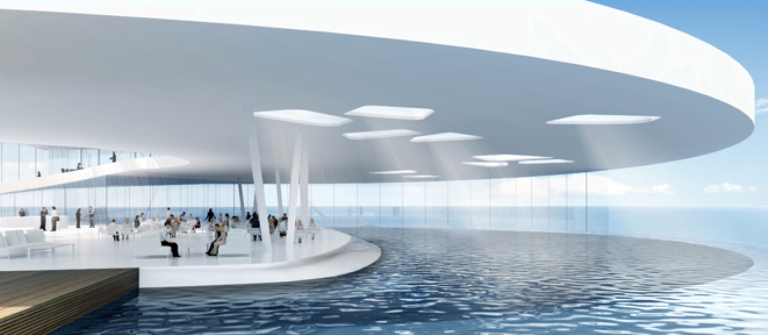
Gaya Island Resort is a 15-minute boat ride from Kota Kinabalu, Borneo.
Set amid the Tunku Abdul Rahman Marine Park with stunning views of Mount Kinabalu, the resort’s 120 villas are perched on a pristine rainforest hillside.
The resort offers several eating options, including Fisherman’s Cove, which has a grand view of the bay. Visitors can also enjoy a picnic at the private Tavajun Bay, a five-minute boat ride from the resort.
Tuesday, March 12, 2013

.jpg) www.bestwayfinder.com
www.bestwayfinder.com
Sunday, March 10, 2013
Airlines Service Vs Hotel Room Service
www.bestwayfinder.com
A flight is too often a stressful storm before the calm of a hotel room. Here's how the former could be more like the latter
 www.bestwayfinder.com
Air travel, for many, is something to be endured rather than enjoyed.
The aviation industry “has been in survival mode for as long as we can remember,” says Eric Léopold, director of the passenger program at the International Air Transport Association (IATA).
Fairly or not, the industry's triage mentality has undermined public perception.
But does it have to be that way?
The hotel industry, so connected to air travel and yet worlds apart when it comes to reputation, could prove an inspiration, if only airlines would change.
With the help of experts in both the airline and hotel industries, we’ve put together a list of ideas that could make flying fun again.
One of the first things potential hotel guests check is the star-rating of their hotel.
It helps to manage customer expectations and provides a clear sense of the value, rather than simply the cost, of a stay.
Airlines don't employ this system.
Although one already exists -- the Skytrax Global Airline Ranking -- few air travelers know about it.
This means airline customers are often unsure of what to expect and may feel entitled to an unrealistic level of comfort.
"No one expects to go back to the glamour days of Pan Am, especially if they're flying economy," says Lori Lincoln, director of corporate communications at Shangri-La International Hotel Management. "But major airlines could improve by addressing the lack of consistency in terms of product and service. When you fly certain airlines, you never know what you're going to get."
 Tokyo hotel staff line up greet the International Olympic Committee.
Ask any top-end hotel executive for the secret of the brand's success, and you'll invariably get the answer: the people.
Airlines will agree. Skytrax CEO Edward Plaisted says that staff service is “critical” to achieving five-star status in a company’s rankings.
And yet staff service after you board an airplane is often a poor substitute for what you receive when you check in at a good hotel.
Incentive is an important factor. While a hotel receptionist or porter could rise to a management position over the course of a career, the ceiling is lower for flight attendants.
Timothy Wright, general manager of the Kowloon Shangri-La hotel in Hong Kong, says that “thorough training and development opportunities throughout the employee’s career” are crucial to maintaining a high level of service.
For example, staff at Shangri-La are carefully chosen for their ability to engage customers and extend genuine care and hospitality.
“The core values of helpfulness, flexibility, anticipation and honesty are very important,” says Wright.
At hotels, this might be achieved with something as simple as a hand-written welcome note, or having the bar staff remember a guest’s drink from one cocktail hour to the next.
 This kind of attention to detail might be easier to sustain in a hotel environment, but airlines could certainly do more to make passengers feel like individuals and less like numbers on a manifest.
American low-cost carrier JetBlue, for one, had a mission to bring humanity back to air travel. Now, says Lincoln, some people will give up miles they can earn on major carriers to fly JetBlue, “because they prefer the experience.”
“From the very beginning we understood something was fundamentally inadequate with the service in our industry and knew that we had to be the change if we wanted to succeed,” says Allison Steinberg, spokesperson for JetBlue.
This ad campaign for the airline outlines some of these changes, which include offering more legroom in economy class and giving passengers the whole can of soda instead of just a cup.
Good hotels avoid the perception of commodifying the travel product by focusing on personalized guest service.
Wright, at Shangri-La, says, "We keep extensive records of guests’ preferences so that we can make them feel at home.”
Loyalty programs and, potentially, social media should allow airlines to do the same, but they rarely do.
"As an airline passenger, you often feel like a widget being shuttled about instead of a person," says Lincoln.
She also observes that while airlines expect flexibility from customers, they rarely reciprocate.
Small offerings, such as a personal greeting and a bottle of water for frequent fliers in economy class, could make a big difference.
In a "white paper" released at the World Passenger Symposium in Abu Dhabi in October 2012, IATA’s Simplifying the Business (StB) think tank even describes an onboard concierge as a feature of air travel in 2020.
"With all the technological advances to support customer service, airlines should be able to make flight experiences just a little more personal," says Lincoln. "That could go a long way to making flying more hospitable."
 Lufthansa's quick self check-ins. Could this be standardized throughout the industry?
While hotels can influence their customers’ experience from the moment they disembark -- for example, with a meet and greet service at the airport and shuttle or limousine transfer -- airlines have comparatively little control over what happens between check-in and boarding.
IATA recognized this in the StB paper, which introduces a new program and a vision of how efficiently people might travel in the future.
Its “vision 2020” for the airport experience is fast and seamless, as well as “predictable, secure and globally consistent."
IATA is the organization that introduced e-tickets and bar-coded boarding passes to streamline the passenger experience.
In response to its recent Global Passenger Survey, new initiatives at IATA aim to provide more self-service options across the journey, phase out the check-in process, develop a "risk-based" security model that "minimizes the need to unpack or disrobe" and standardize automated border control.
The goal is to make flying simple and satisfying.
A flight is too often a stressful storm before the calm of a hotel room. Here's how the former could be more like the latter
www.bestwayfinder.comAir travel, for many, is something to be endured rather than enjoyed.
The aviation industry “has been in survival mode for as long as we can remember,” says Eric Léopold, director of the passenger program at the International Air Transport Association (IATA).
Fairly or not, the industry's triage mentality has undermined public perception.
But does it have to be that way?
The hotel industry, so connected to air travel and yet worlds apart when it comes to reputation, could prove an inspiration, if only airlines would change.
With the help of experts in both the airline and hotel industries, we’ve put together a list of ideas that could make flying fun again.
1. A recognized rating system
Skytrax rates Emirates a four-star airline -- we'd call its A380 business class lounge five-star.One of the first things potential hotel guests check is the star-rating of their hotel.
It helps to manage customer expectations and provides a clear sense of the value, rather than simply the cost, of a stay.
Airlines don't employ this system.
Although one already exists -- the Skytrax Global Airline Ranking -- few air travelers know about it.
This means airline customers are often unsure of what to expect and may feel entitled to an unrealistic level of comfort.
"No one expects to go back to the glamour days of Pan Am, especially if they're flying economy," says Lori Lincoln, director of corporate communications at Shangri-La International Hotel Management. "But major airlines could improve by addressing the lack of consistency in terms of product and service. When you fly certain airlines, you never know what you're going to get."
2. Dedicated staff
Ask any top-end hotel executive for the secret of the brand's success, and you'll invariably get the answer: the people.
Airlines will agree. Skytrax CEO Edward Plaisted says that staff service is “critical” to achieving five-star status in a company’s rankings.
And yet staff service after you board an airplane is often a poor substitute for what you receive when you check in at a good hotel.
Incentive is an important factor. While a hotel receptionist or porter could rise to a management position over the course of a career, the ceiling is lower for flight attendants.
Timothy Wright, general manager of the Kowloon Shangri-La hotel in Hong Kong, says that “thorough training and development opportunities throughout the employee’s career” are crucial to maintaining a high level of service.
For example, staff at Shangri-La are carefully chosen for their ability to engage customers and extend genuine care and hospitality.
“The core values of helpfulness, flexibility, anticipation and honesty are very important,” says Wright.
3. Restore the human touch
A can of soda is vastly superior to a small plastic cup of soda.
Humanity in modern travel means making sure the customer feels properly looked after.At hotels, this might be achieved with something as simple as a hand-written welcome note, or having the bar staff remember a guest’s drink from one cocktail hour to the next.
American low-cost carrier JetBlue, for one, had a mission to bring humanity back to air travel. Now, says Lincoln, some people will give up miles they can earn on major carriers to fly JetBlue, “because they prefer the experience.”
“From the very beginning we understood something was fundamentally inadequate with the service in our industry and knew that we had to be the change if we wanted to succeed,” says Allison Steinberg, spokesperson for JetBlue.
This ad campaign for the airline outlines some of these changes, which include offering more legroom in economy class and giving passengers the whole can of soda instead of just a cup.
4. Personalized experiences
Airlines might take a cue from Mandarin Oriental's personal butler service. www.bestwayfinder.com
Good hotels avoid the perception of commodifying the travel product by focusing on personalized guest service.
Wright, at Shangri-La, says, "We keep extensive records of guests’ preferences so that we can make them feel at home.”
Loyalty programs and, potentially, social media should allow airlines to do the same, but they rarely do.
"As an airline passenger, you often feel like a widget being shuttled about instead of a person," says Lincoln.
She also observes that while airlines expect flexibility from customers, they rarely reciprocate.
Small offerings, such as a personal greeting and a bottle of water for frequent fliers in economy class, could make a big difference.
In a "white paper" released at the World Passenger Symposium in Abu Dhabi in October 2012, IATA’s Simplifying the Business (StB) think tank even describes an onboard concierge as a feature of air travel in 2020.
"With all the technological advances to support customer service, airlines should be able to make flight experiences just a little more personal," says Lincoln. "That could go a long way to making flying more hospitable."
5. Improved efficiency
While hotels can influence their customers’ experience from the moment they disembark -- for example, with a meet and greet service at the airport and shuttle or limousine transfer -- airlines have comparatively little control over what happens between check-in and boarding.
IATA recognized this in the StB paper, which introduces a new program and a vision of how efficiently people might travel in the future.
Its “vision 2020” for the airport experience is fast and seamless, as well as “predictable, secure and globally consistent."
IATA is the organization that introduced e-tickets and bar-coded boarding passes to streamline the passenger experience.
In response to its recent Global Passenger Survey, new initiatives at IATA aim to provide more self-service options across the journey, phase out the check-in process, develop a "risk-based" security model that "minimizes the need to unpack or disrobe" and standardize automated border control.
The goal is to make flying simple and satisfying.
If airlines could adopt a few of these measures, perhaps it could be. www.bestwayfinder.com
Friday, March 8, 2013
China travel tips
www.bestwayfinder.com
Don't be intimidated says a local expert. Here's how to do China without the hassles
 www.bestwayfinder.comwww.bestwayfinder.com
Travel in China can rattle even veteran travelers.
This is understandable. China is a huge country with enough languages and dialects to leave even many native Chinese flummoxed at the thought of communicating away from home.
But traveling here isn't scary, and it's not unmanageable.
Traveling for the past few years from my home base in Shanghai, I've picked up a lot of tips -- both from my own experiences and from others -- that make life on the road in China a little bit easier and a lot more rewarding.
For families, this can save a lot of cash. Rather than needing two rooms, a family of four can get cozy in a twin room, where both beds are the same size as a regular double bed.
Don't spend coins in north China.
Conversely, in northern and western China, expect market vendors to reject coins outright. They only like paper money no matter how small the denomination.
The basic dictionary app is free. It costs US$14.95 to buy the optical character recognition function (compatible with the iPhone 4 or 5 camera). Point the iPhone at a Chinese menu and get an instant translation.
China is the land of possibilities. If you can dream it, someone can make it.
The Shandong Juancheng Neon-Plasma Tech company make customized neon signs in one week and will ship anywhere.
These guides to Inner Mongolia, Gansu and soon Sichuan and Qinghai contain detailed itineraries, maps and language cards specific for each stage of the trip.
You want rice? You gotta say it aloud.
Anyone wanting rice with his or her meal should make it clear to the waiter by saying: mifan (rice) mashang (straight away).
This is no issue for anyone fond of congee and pickles, but can be an unimaginable hurdle for children or picky eaters. Bring a box of their favorite cereal and a few small cartons of milk and everyone starts the day happy.
Most hotels don't mind.
Yes, the traffic is chaotic and the air could be better -- much better -- but China is one of the safest countries in the world for female travelers, solo travelers and families.
A portrait delivered instantly on a Polaroid camera is a much-appreciated, on-the-spot gift.
Fujifilm Instax Mini 7 Polaroid camera retails for around RMB 400 (US$62) from large electronics retailers.
But that's not how the Chinese see things.
All of these outdoor areas are public spaces, and lanes and alleys hold some of the most captivating scenes in China's big cities.
Listening in to a heated discussion in Shanghai between a taxi driver and a Chinese friend I thought they were about to come to blows.
"No," they told me. "We were just talking together about how devastating the Sichuan earthquake was."
But help is always at hand: those under 25 years old are most likely to speak both standard Mandarin and English.
Students who have studied English in books for years, but have had little contact with native English speakers, may more readily understand written questions.
Tip: Eiffel Tower is "ai fei'er tie ta," Statue of Liberty is "zi you nv shen xiang" and Great Barrier Reef is "da bao jiao."
Interesting stalls like this might be steps away from your hotel.
"TCM is ingrained in Chinese culture," says Canadian Leslie Bottrell, who is trained in both Western and Traditional Chinese Medicine.
"It permeates everyday life and so empowers individuals to be responsible for their wellness by promoting disease prevention."
Consultations are available at Longhua Hospital in Shanghai, one of the country's top TCM Hospitals.
LongHua Hospital, affiliated with Shanghai University of Traditional Chinese Medicine, 725 Wanping Nan Lu, Xuhui District, Shanghai; +86 21 6438 5700; open daily 8-11:30 a.m., 1-5 p.m.
Art exhibit in Opposite House: a wall comprising more than 6,000 drawers.
"Their permanent art collection is second to none,” says Hong Kong-based art consultant Alison Pickett.
“And they have a fantastic rotating exhibition venue in the lobby which showcases really challenging and interesting installations, many of which you wouldn't get to see in any of the galleries."
The Red Gate Gallery in Beijing holds open studio exhibitions. Visitors can see how resident international artists work, live and create in Beijing.
Three Mountain (San Shan) Island northwest of Shanghai is an ideal spot to venture away from the big city for the weekend with the family.
"Our family took a weekend trip by train and boat to San Shan Dao, where we had an extraordinary China experience staying in small local guest houses and exploring the island,” says Lynette MacDonald, editor in chief of Shanghai Family magazine and frequent traveler with children.
San Shan Dao, near Suzhou, Jiangsu Province
Learn everything about Chinese cha here.
"On the second floor, at Qing Quan Tea (shop 218), I can sit for hours testing white or red teas and listening to owner David Li talking about health benefits, differences in soil or climate conditions or quality differences," says China-based food writer and tea lover Anna-Lena Bjarneberg.
"China is very dusty and hard on photo gear, so a good bag that's well sealed but also accessible is essential."
The Australian photographer also suggests using a polarizing filter to cut through China's frequent smog. "If there is any blue in the sky this will make it appear more vibrant," he says.
Don't be intimidated says a local expert. Here's how to do China without the hassles
www.bestwayfinder.comwww.bestwayfinder.com
Hitting the China travel trail doesn't have to be a struggle if you arm yourself with the right knowledge. And maybe a few language apps....
Travel in China can rattle even veteran travelers.
This is understandable. China is a huge country with enough languages and dialects to leave even many native Chinese flummoxed at the thought of communicating away from home.
But traveling here isn't scary, and it's not unmanageable.
Traveling for the past few years from my home base in Shanghai, I've picked up a lot of tips -- both from my own experiences and from others -- that make life on the road in China a little bit easier and a lot more rewarding.
1. Score extra beds the easy way
Chinese hotels aren't too fussy when it comes to matching the number of beds to the number of people, particularly when the extra bodies are children. www.bestwayfinder.com
For families, this can save a lot of cash. Rather than needing two rooms, a family of four can get cozy in a twin room, where both beds are the same size as a regular double bed.
Don't spend coins in north China.
2. Follow proper currency protocol
Don't insult a Shanghai taxi driver by burdening him with small change, such as 1 yuan or 5 jiao notes. He likes the jingle of coins.Conversely, in northern and western China, expect market vendors to reject coins outright. They only like paper money no matter how small the denomination.
3. Use the best language app for travelers
Pleco is the best Chinese language app for travelers. www.bestwayfinder.com
The basic dictionary app is free. It costs US$14.95 to buy the optical character recognition function (compatible with the iPhone 4 or 5 camera). Point the iPhone at a Chinese menu and get an instant translation.
4. Customize your gifts
Have fine items made by hand and to order -- a neon sign of your name, pair of riding boots, set of sheets, oak cabinet, silk quilt or cashmere coat.China is the land of possibilities. If you can dream it, someone can make it.
The Shandong Juancheng Neon-Plasma Tech company make customized neon signs in one week and will ship anywhere.
 www.bestwayfinder.com
5. Use the best guides to offbeat China
China Little T(r)ips is a series of guides for those who want to get off the well-worn tourist path in China, but don't have the inside knowledge or the language skills to do so.These guides to Inner Mongolia, Gansu and soon Sichuan and Qinghai contain detailed itineraries, maps and language cards specific for each stage of the trip.
You want rice? You gotta say it aloud.
6. Order rice the right way
Rice is rarely served during a meal in Chinese restaurants, being seen as a cheap way to fill up at the end if needed.Anyone wanting rice with his or her meal should make it clear to the waiter by saying: mifan (rice) mashang (straight away).
7. Toilet paper reminder
Toilet tissue is rarely found in public restrooms in China. Carry your own supplies.8. Sidestep difficult breakfasts
Outside of large cities and internationally branded hotels, Chinese hotel breakfasts cater exclusively to the local market.This is no issue for anyone fond of congee and pickles, but can be an unimaginable hurdle for children or picky eaters. Bring a box of their favorite cereal and a few small cartons of milk and everyone starts the day happy.
Most hotels don't mind.
 www.bestwayfinder.com
9. Don't worry -- it's safe
China is nowhere near as terrifying as many guidebooks would have you believe.Yes, the traffic is chaotic and the air could be better -- much better -- but China is one of the safest countries in the world for female travelers, solo travelers and families.
10. Give -- and get -- instant gratification
Those traveling in rural China often wish to give a small gift to locals they meet, but are unsure of what might be considered appropriate.A portrait delivered instantly on a Polaroid camera is a much-appreciated, on-the-spot gift.
Fujifilm Instax Mini 7 Polaroid camera retails for around RMB 400 (US$62) from large electronics retailers.
11. Trespass with confidence
Accustomed to the idea of private property, international travelers are often reluctant to stray from worn footpaths into lanes and hutongs for fear of intruding.But that's not how the Chinese see things.
All of these outdoor areas are public spaces, and lanes and alleys hold some of the most captivating scenes in China's big cities.
12. Don't be fooled by loud voices
Chinese people like to converse very loudly and passionately at times, and it can be easy to mistake this for an argument.Listening in to a heated discussion in Shanghai between a taxi driver and a Chinese friend I thought they were about to come to blows.
"No," they told me. "We were just talking together about how devastating the Sichuan earthquake was."
13. Need help? Find a high school student
The array of Mandarin dialects and variations across China can make communication difficult even for native Mandarin speakers.But help is always at hand: those under 25 years old are most likely to speak both standard Mandarin and English.
Students who have studied English in books for years, but have had little contact with native English speakers, may more readily understand written questions.
14. Make a hometown connection
Learn the name of your country's most famous landmark for beaming instant recognition from taxi drivers, waiters and the man on the street.Tip: Eiffel Tower is "ai fei'er tie ta," Statue of Liberty is "zi you nv shen xiang" and Great Barrier Reef is "da bao jiao."
Interesting stalls like this might be steps away from your hotel.
 www.bestwayfinder.com
15. Get a backstreet breakfast
In order to get some local color on business trips that will otherwise be spent inside taxis and boardrooms, "take to the backstreets behind your hotel for an early breakfast of dumplings or noodles and watch the area wake up while you eat," suggests Australian business traveler Matthew Tobin.16. Enhance wellness
Want to unblock your qi? Hit up a Traditional Chinese Medicine (TCM) clinic. Illness isn't an essential requirement -- TCM doctors believe preventing disease is just as important as treating it."TCM is ingrained in Chinese culture," says Canadian Leslie Bottrell, who is trained in both Western and Traditional Chinese Medicine.
"It permeates everyday life and so empowers individuals to be responsible for their wellness by promoting disease prevention."
Consultations are available at Longhua Hospital in Shanghai, one of the country's top TCM Hospitals.
LongHua Hospital, affiliated with Shanghai University of Traditional Chinese Medicine, 725 Wanping Nan Lu, Xuhui District, Shanghai; +86 21 6438 5700; open daily 8-11:30 a.m., 1-5 p.m.
Art exhibit in Opposite House: a wall comprising more than 6,000 drawers.
17. Find art in unusual places
Some boutique hotels provide interesting art experiences, like the Opposite House Hotel in the Sanlitun area of Beijing."Their permanent art collection is second to none,” says Hong Kong-based art consultant Alison Pickett.
“And they have a fantastic rotating exhibition venue in the lobby which showcases really challenging and interesting installations, many of which you wouldn't get to see in any of the galleries."
The Red Gate Gallery in Beijing holds open studio exhibitions. Visitors can see how resident international artists work, live and create in Beijing.
 www.bestwayfinder.com
18. Take the kids along ... without regret
Taking small but manageable risks when traveling in China with children can reap big rewards.Three Mountain (San Shan) Island northwest of Shanghai is an ideal spot to venture away from the big city for the weekend with the family.
"Our family took a weekend trip by train and boat to San Shan Dao, where we had an extraordinary China experience staying in small local guest houses and exploring the island,” says Lynette MacDonald, editor in chief of Shanghai Family magazine and frequent traveler with children.
San Shan Dao, near Suzhou, Jiangsu Province
Learn everything about Chinese cha here.
19. Get a tea education
Shanghai's Laoximen Tea Plaza houses a variety of specialty tea shops."On the second floor, at Qing Quan Tea (shop 218), I can sit for hours testing white or red teas and listening to owner David Li talking about health benefits, differences in soil or climate conditions or quality differences," says China-based food writer and tea lover Anna-Lena Bjarneberg.
20. Take better pictures
The best gear investments to make before coming to China are an excellent camera bag and polarizing filter, according to professional photographer and frequent China traveler Roger D'Souza. www.bestwayfinder.com
"China is very dusty and hard on photo gear, so a good bag that's well sealed but also accessible is essential."
The Australian photographer also suggests using a polarizing filter to cut through China's frequent smog. "If there is any blue in the sky this will make it appear more vibrant," he says.
Sawasdee Village Resort Thailand...
www.bestwayfinder.com
Sawasdee Village Resort & Spa is located in Thailand’s province – Phuket. It’s situated only 500 meters distance from Kata Beach. The tropical gardens and beautiful scenery act as the perfect backdrop to your trip to one of Thailand’s most popular islands.
Hotel Rome Cavalieri Waldorf Astoria Hotels and Resort
www.bestwayfinder.com
Hotel Rome Cavalieri – one of the most prestigious hotels in Rome. This deluxe hotel is located in the city center only minutes walking to Mediterranean park, St. Peter’s Basilica, Roman forum and other exciting places of Rome.www.bestwayfinder.comwww.bestwayfinder.com
.png) www.bestwayfinder.com
www.bestwayfinder.comSawasdee Village Resort & Spa is located in Thailand’s province – Phuket. It’s situated only 500 meters distance from Kata Beach. The tropical gardens and beautiful scenery act as the perfect backdrop to your trip to one of Thailand’s most popular islands.
Hotel Rome Cavalieri Waldorf Astoria Hotels and Resort
www.bestwayfinder.com
.png) www.bestwayfinder.com
www.bestwayfinder.comThe W Retreat & Spa Vieques Island in Puerto Rico
www.bestwayfinder.com
The W Retreat & Spa Vieques Island in Puerto Rico is situated on two private, secluded beaches. While staying at this hotel you will be provided the gateway for a luxurious villa style vacation. Villa offers the beautiful and stunning views of near and distant islands.
www.bestwayfinder.com
Luxury Hotels in Dubai
If you want to spend your vacations in the most luxurious places, then you should visit Dubai- city of thrilling innovation and luxurious excesses. Dubai is known for its extremes and among them are world’s first seven-star hotel. There are plenty of different opportunities for you, no matter what type of hotel you wish to stay and what is the reason of your holidays, whether honey moon, family vacations or business meetings with your partners. Here is the gallery of the Dubai’s most popular, luxury hotels.
 www.bestwayfinder.com
The W Retreat & Spa Vieques Island in Puerto Rico is situated on two private, secluded beaches. While staying at this hotel you will be provided the gateway for a luxurious villa style vacation. Villa offers the beautiful and stunning views of near and distant islands.
www.bestwayfinder.com
Luxury Hotels in Dubai
 www.bestwayfinder.com
If you want to spend your vacations in the most luxurious places, then you should visit Dubai- city of thrilling innovation and luxurious excesses. Dubai is known for its extremes and among them are world’s first seven-star hotel. There are plenty of different opportunities for you, no matter what type of hotel you wish to stay and what is the reason of your holidays, whether honey moon, family vacations or business meetings with your partners. Here is the gallery of the Dubai’s most popular, luxury hotels.
Wednesday, March 6, 2013
Best of Abu Dhabi
www.bestwayfinder.com
Fancy a coffee with camel milk? Gold bar from a vending machine? The United Arab Emirates capital is here to please ... and amaze
Fueled by petrodollars and ambition, Abu Dhabi is a young gun and wise uncle rolled into one charming if slightly schizo personality.
It's split between the original city on its crowded island nub, some 200 other islands and a slew of emerging mainland communities and attractions.
Before the city’s urban planners gussy up the United Arab Emirates’ capital beyond all recognition, a sojourn in the city still provides an Arabia-meets-Metropolis experience, merging a half-century of achievement with a 3D Technicolor vision of the future.
Sea, sand and skyline. Abu Dhabi's diversity surprises many visitors.Arab expats and Emiratis in traditional garb vie with suited Western consultants for café tables, while international A-listers and sports stars motor, sing, putt and pose their way through a packed social calendar of festivals and tournaments.
While the vibe is more relaxed than its nearest neighbor, Dubai, there’s still ample opportunity to “live large."
And even though the city feels like it’s fast approaching a cultural turning point, if you scratch beneath the surface you’ll catch a glimpse of the best of Abu Dhabi.
 www.bestwayfinder.comAt your service, wherever, whenever. A sprawling cupola-covered homage to opulence fronted by a 1.3-kilometer-long private beach, this US$3 billion bastion of hospitality is the haunt of royalty, oligarchs and awestruck tourists passing through on the pretense of visiting the permanent Saadiyat Island Cultural District exhibition.
Larger than life in every respect, trekking the 1,000 meters from East to West Wing is the perfect way to walk off dinner.
If your credit card limit doesn’t quite stretch to a US$15,000 a night Palace Suite you can still take home a little bit of luxury from the hotel’s own gold bar vending machine.
St. Regis Saadiyat Island Resort wwww.bestwayfinder.com
"Sure, I think we can hang out for a while."There’s not a lot to do on Saadiyat Island -- Abu Dhabi’s much-vaunted cultural hub -- until the first of a quintet of world-class museums opens in 2015. Until then the new St. Regis delivers a splendid excuse for simply lounging around in five-star style.
Overlooking the popular golf club and a sea turtle conservation area, and landscaped to within centimeters of its life, indulgent relaxation is the name of the game with on-call pool butlers proffering iced towels and spa therapists to pummel the body beautiful to perfection.
Saadiyat Island; +971 2 4988 881; from 1,212 dirhams; www.stregissaadiyatisland.com
Fancy a coffee with camel milk? Gold bar from a vending machine? The United Arab Emirates capital is here to please ... and amaze
 www.bestwayfinder.com
Fueled by petrodollars and ambition, Abu Dhabi is a young gun and wise uncle rolled into one charming if slightly schizo personality.
It's split between the original city on its crowded island nub, some 200 other islands and a slew of emerging mainland communities and attractions.
Before the city’s urban planners gussy up the United Arab Emirates’ capital beyond all recognition, a sojourn in the city still provides an Arabia-meets-Metropolis experience, merging a half-century of achievement with a 3D Technicolor vision of the future.
Sea, sand and skyline. Abu Dhabi's diversity surprises many visitors.Arab expats and Emiratis in traditional garb vie with suited Western consultants for café tables, while international A-listers and sports stars motor, sing, putt and pose their way through a packed social calendar of festivals and tournaments.
While the vibe is more relaxed than its nearest neighbor, Dubai, there’s still ample opportunity to “live large."
And even though the city feels like it’s fast approaching a cultural turning point, if you scratch beneath the surface you’ll catch a glimpse of the best of Abu Dhabi.
Hotels www.bestwayfinder.com
Luxury
Emirates Palace www.bestwayfinder.comAt your service, wherever, whenever. A sprawling cupola-covered homage to opulence fronted by a 1.3-kilometer-long private beach, this US$3 billion bastion of hospitality is the haunt of royalty, oligarchs and awestruck tourists passing through on the pretense of visiting the permanent Saadiyat Island Cultural District exhibition.Larger than life in every respect, trekking the 1,000 meters from East to West Wing is the perfect way to walk off dinner.
If your credit card limit doesn’t quite stretch to a US$15,000 a night Palace Suite you can still take home a little bit of luxury from the hotel’s own gold bar vending machine.
St. Regis Saadiyat Island Resort wwww.bestwayfinder.com
 www.bestwayfinder.com
"Sure, I think we can hang out for a while."There’s not a lot to do on Saadiyat Island -- Abu Dhabi’s much-vaunted cultural hub -- until the first of a quintet of world-class museums opens in 2015. Until then the new St. Regis delivers a splendid excuse for simply lounging around in five-star style.
Overlooking the popular golf club and a sea turtle conservation area, and landscaped to within centimeters of its life, indulgent relaxation is the name of the game with on-call pool butlers proffering iced towels and spa therapists to pummel the body beautiful to perfection.
Saadiyat Island; +971 2 4988 881; from 1,212 dirhams; www.stregissaadiyatisland.com
Tuesday, March 5, 2013
World's largest natural flower garden opens in Dubai
www.bestwayfinder.com
The Dubai Miracle Garden has more than 45 million flowers. But the real miracle is that it was built at all
Another week, another announcement of a massive super project in Dubai.
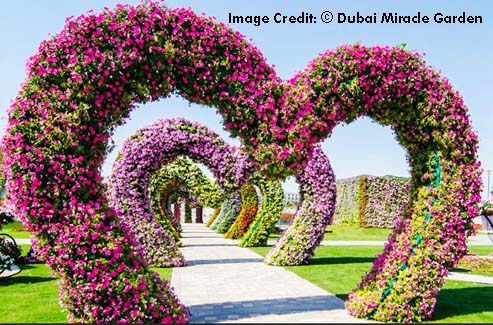
www.bestwayfinder.comThe Middle Eastern city's latest mega-project is the Dubai Miracle Garden.
Billing itself as the world's largest natural flower garden, the 72,000-square-meter attraction, located in Dubailand, has more than 45 million flowers.
www.bestwayfinder.com
The name is apt, considering this mega-garden was -– like pretty much everything in Dubai –- built on desert land.
 www.bestwayfinder.com www.bestwayfinder.com
According to a report in Gulfnews.com, Miracle Gardens' landscaper, Akar, says it wants to demonstrate "that it’s possible to green the desert through judicious re-use of waste water, through drip irrigation.”
www.bestwayfinder.com
The U.A.E.-based company is also planting trees on the perimeter as windbreakers.
The Dubai Miracle Garden has more than 45 million flowers. But the real miracle is that it was built at all
Another week, another announcement of a massive super project in Dubai.
 www.bestwayfinder.com
 www.bestwayfinder.com
 www.bestwayfinder.com
.png) www.bestwayfinder.com
www.bestwayfinder.comwww.bestwayfinder.comThe Middle Eastern city's latest mega-project is the Dubai Miracle Garden.
 www.bestwayfinder.com
Billing itself as the world's largest natural flower garden, the 72,000-square-meter attraction, located in Dubailand, has more than 45 million flowers.
www.bestwayfinder.com
The name is apt, considering this mega-garden was -– like pretty much everything in Dubai –- built on desert land.
www.bestwayfinder.com www.bestwayfinder.comAccording to a report in Gulfnews.com, Miracle Gardens' landscaper, Akar, says it wants to demonstrate "that it’s possible to green the desert through judicious re-use of waste water, through drip irrigation.”
www.bestwayfinder.com
The U.A.E.-based company is also planting trees on the perimeter as windbreakers.
Though the gardens are now open to visitors, the attraction isn't complete. Shopping outlets, restaurants and plant nurseries will be added during the second development phase, which kicks off mid-2013.
 www.bestwayfinder.com www.bestwayfinder.com
www.bestwayfinder.com
 www.bestwayfinder.com www.bestwayfinder.com
The gardens will be closed during Dubai's notoriously hot summer months. Temperatures average 40 C (104 F) from June to September -- not exactly conducive to flower gazing.
www.bestwayfinder.com www.bestwayfinder.com
The gardens will be closed during Dubai's notoriously hot summer months. Temperatures average 40 C (104 F) from June to September -- not exactly conducive to flower gazing.
Dubai Miracle Garden: Al Barsha South; open daily, 9 a.m.-9 p.m., October to late May. Entrance 20 AED (US$5.50) per person, kids under three free; www.the-miracle-garden.com
www.bestwayfinder.com
www.bestwayfinder.com www.bestwayfinder.comwww.bestwayfinder.com
www.bestwayfinder.com www.bestwayfinder.comDubai Miracle Garden: Al Barsha South; open daily, 9 a.m.-9 p.m., October to late May. Entrance 20 AED (US$5.50) per person, kids under three free; www.the-miracle-garden.com
Subscribe to:
Posts (Atom)